Culture & Community Building
How I helped shape design culture & created spaces for collaboration at Salesforce India
Design Leadership
Culture Building
Salesforce
Key Impact
OUTCOME
15,000+ designer reach (with contribution to Salesforce Design Days)
3+ teams adopted Retrospective framework (and counting)
Established recurring traditions of year-end design nuggets (proving sustainability)
Enhanced cross-functional relationships (qualitative and strategic)
team
Marketing Cloud India
Marketing Cloud Global
Platforms India
Participating in critiques and in feedback loops that help us build the right thing
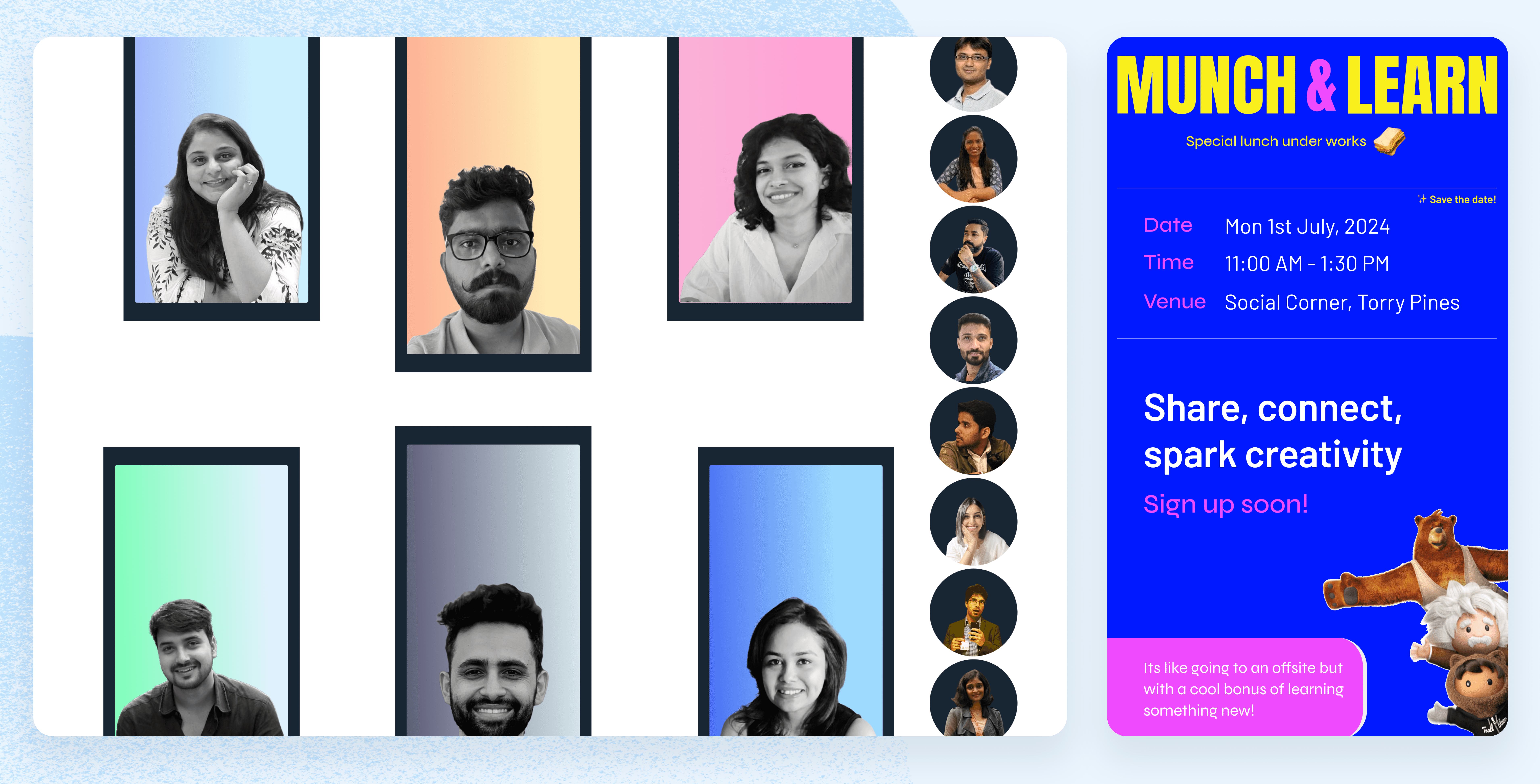
Sometimes the best ideas start simple. We were tired of mundane team meetings and wanted a space where we could learn from each other's unique skillsets as designers instead of just critiquing work (which was of course important). So I pitched "Munch and Learn" to my leaders - creative people talking about their design passions and lessons learned, over good food.
What started as informal knowledge sharing in a 40-person conference room in our Bangalore office turned into something bigger. My M&L partner, Aishwarya and I spent weeks curating talks and crafting discussion formats that worked for both introverts and extroverts. We threw in prizes for engagement in design exercises. Several talks were so well-received that they got selected for Salesforce's Design Days, one of the biggest design events in India, reaching over 15,000 designers globally.
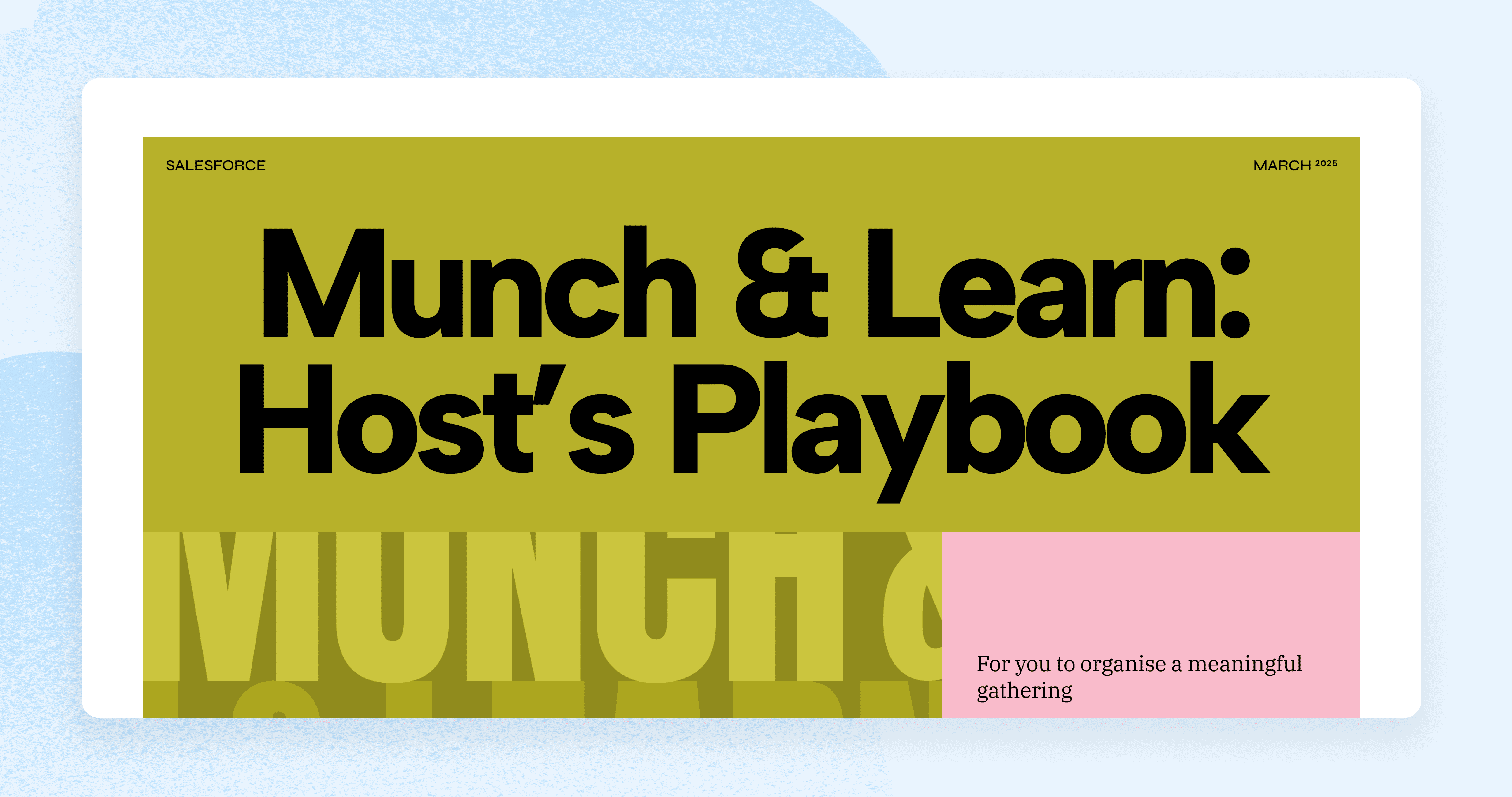
I didn't want this to be a one-off success, so I created a playbook that any team could use to host their own design gatherings. Watching team members present ideas with fellow passionate designers that later influenced design decisions was incredibly rewarding.

Design retrospectives that actually change things
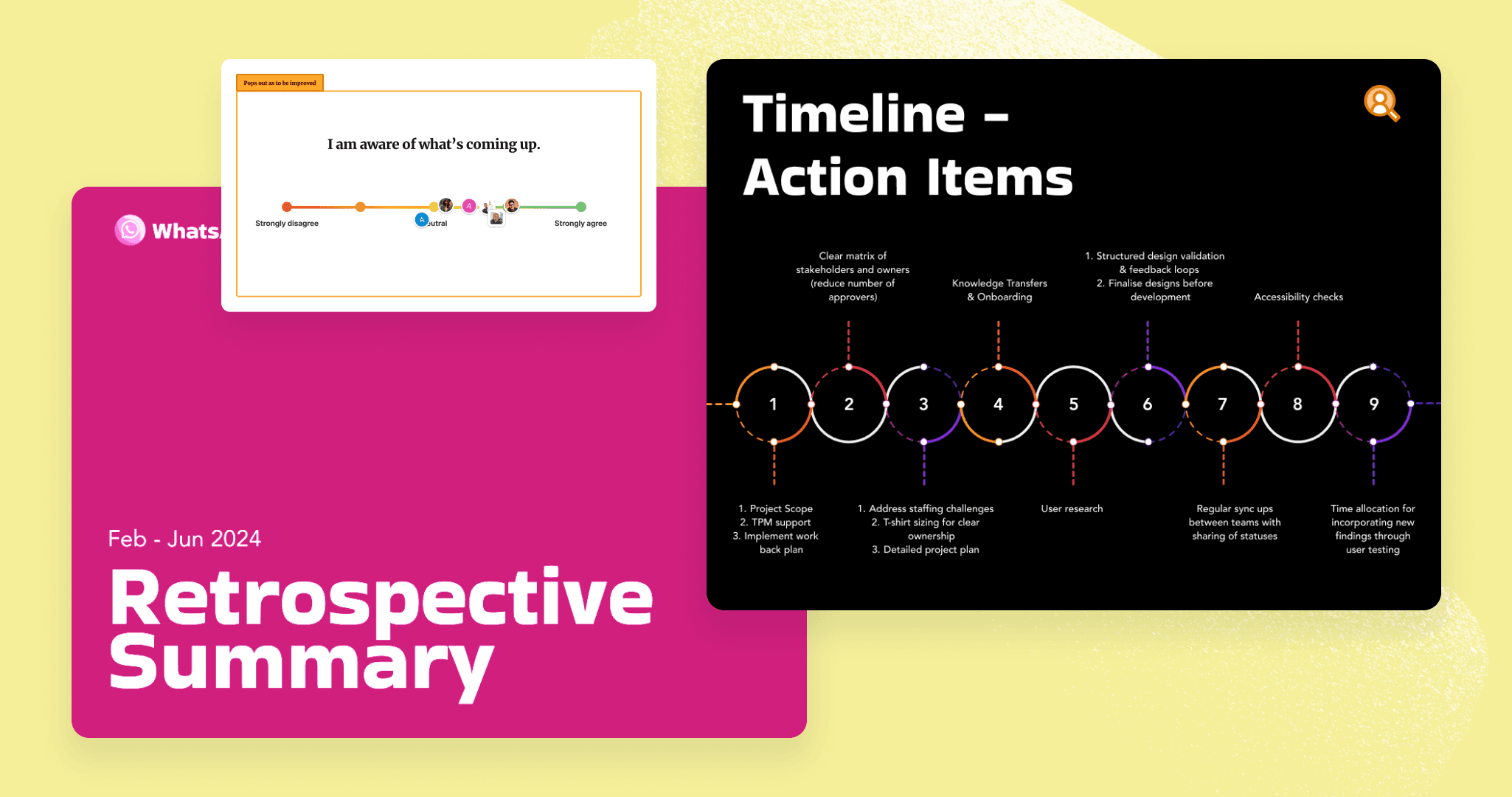
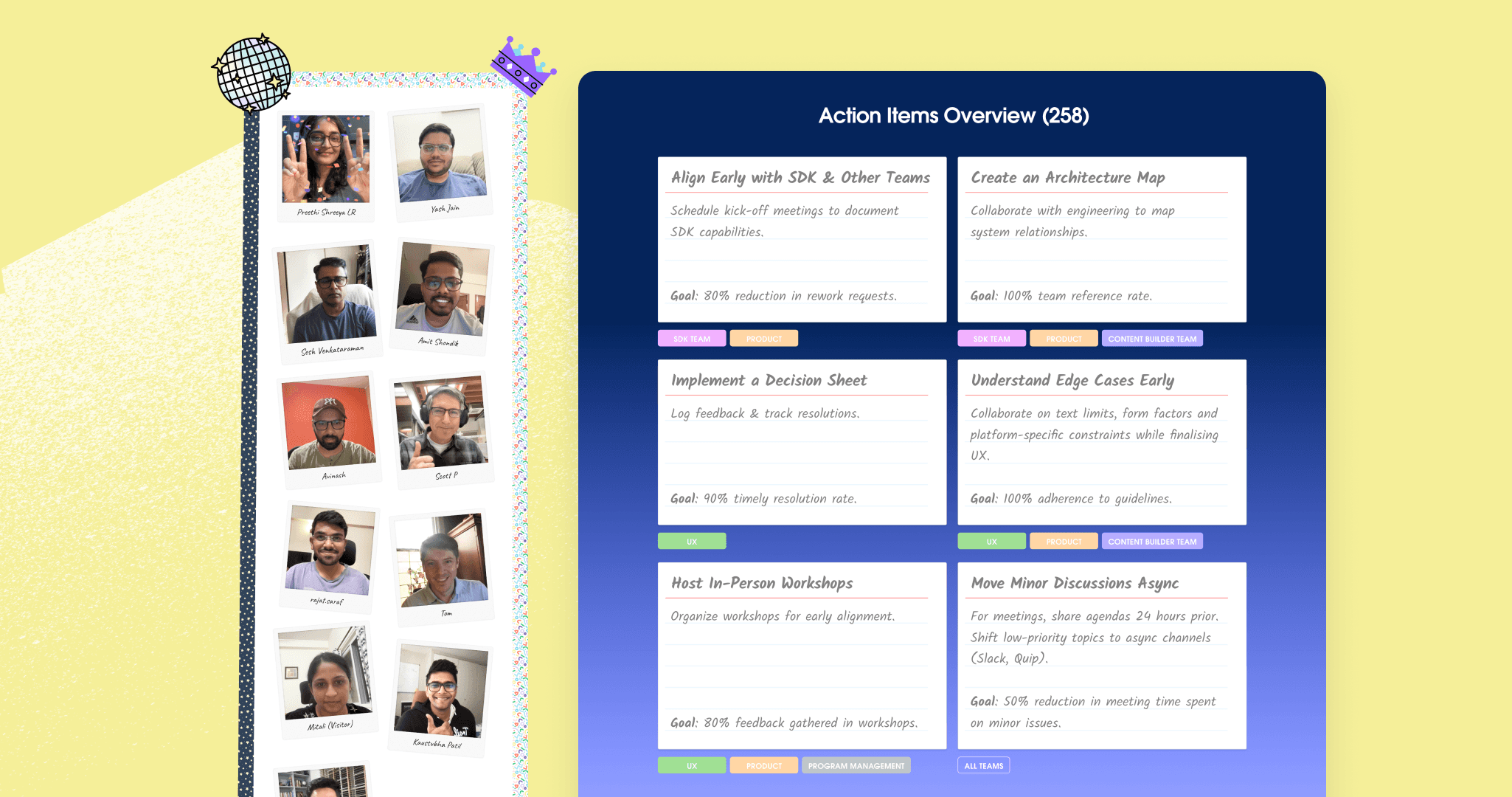
In many of the standard retros, good intentions go to die. There's rarely any follow-through. So I reimagined them. I designed sessions that focused on real collaboration pain points between UX, engineering and product teams. We'd walk out with concrete next steps, not just sticky note archives. Other teams at Salesforce started asking for our retro format. It became a way to actually collaborate across disciplines, beyond just the design team.
Hackathons
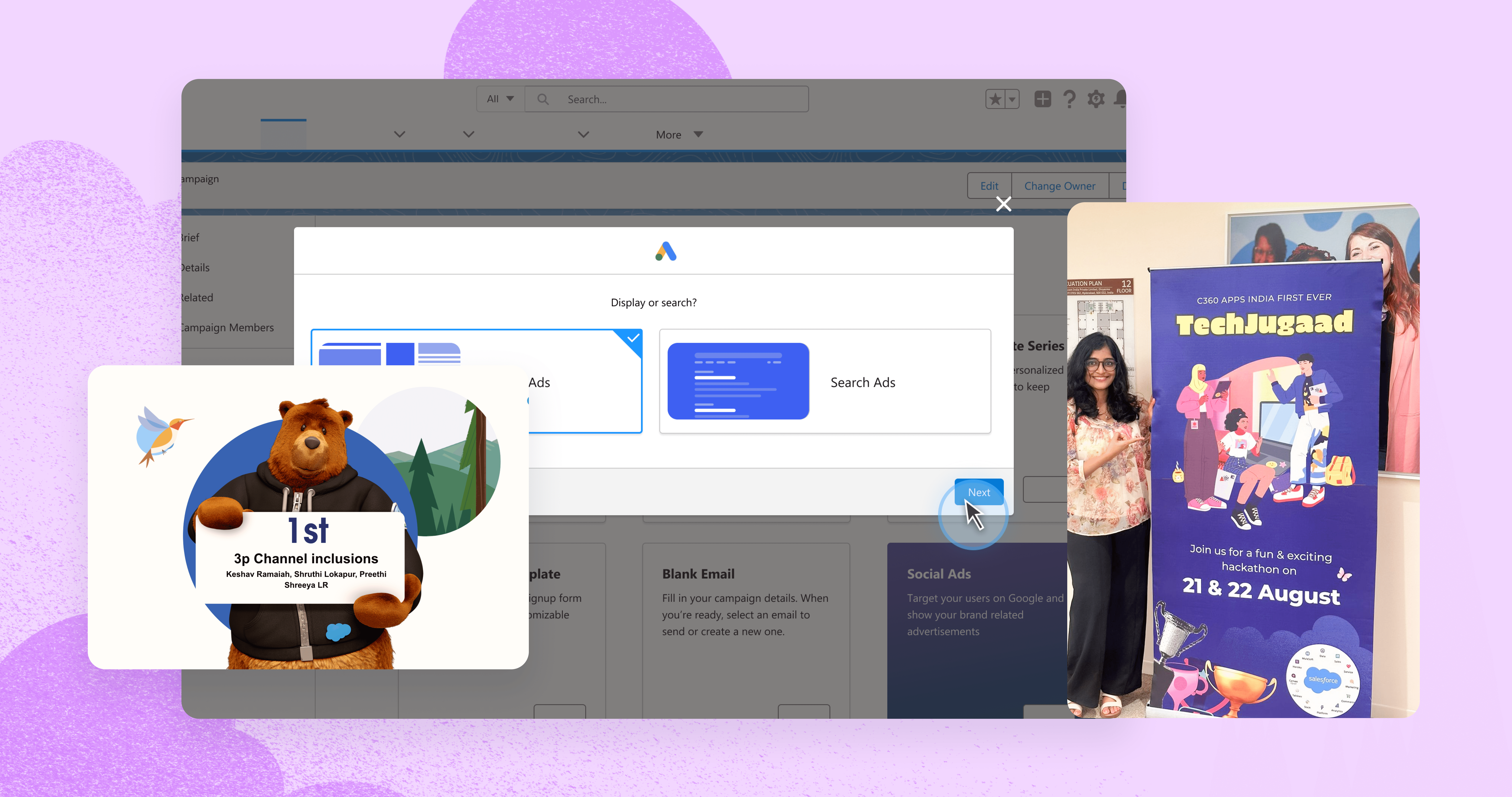
Our team's winning hackathon demo introduced Social Ads as a channel for Marketing Cloud. But the real win was aligning engineering and product teams quickly through rapid research for feasibility and desirability.
I also designed brand assets for hackathons because I love designing for events, especially seeing them come alive on flex boards. For me, hackathons are about proving concepts that can shape our roadmap and I love spending time jamming on design and ideas with people.
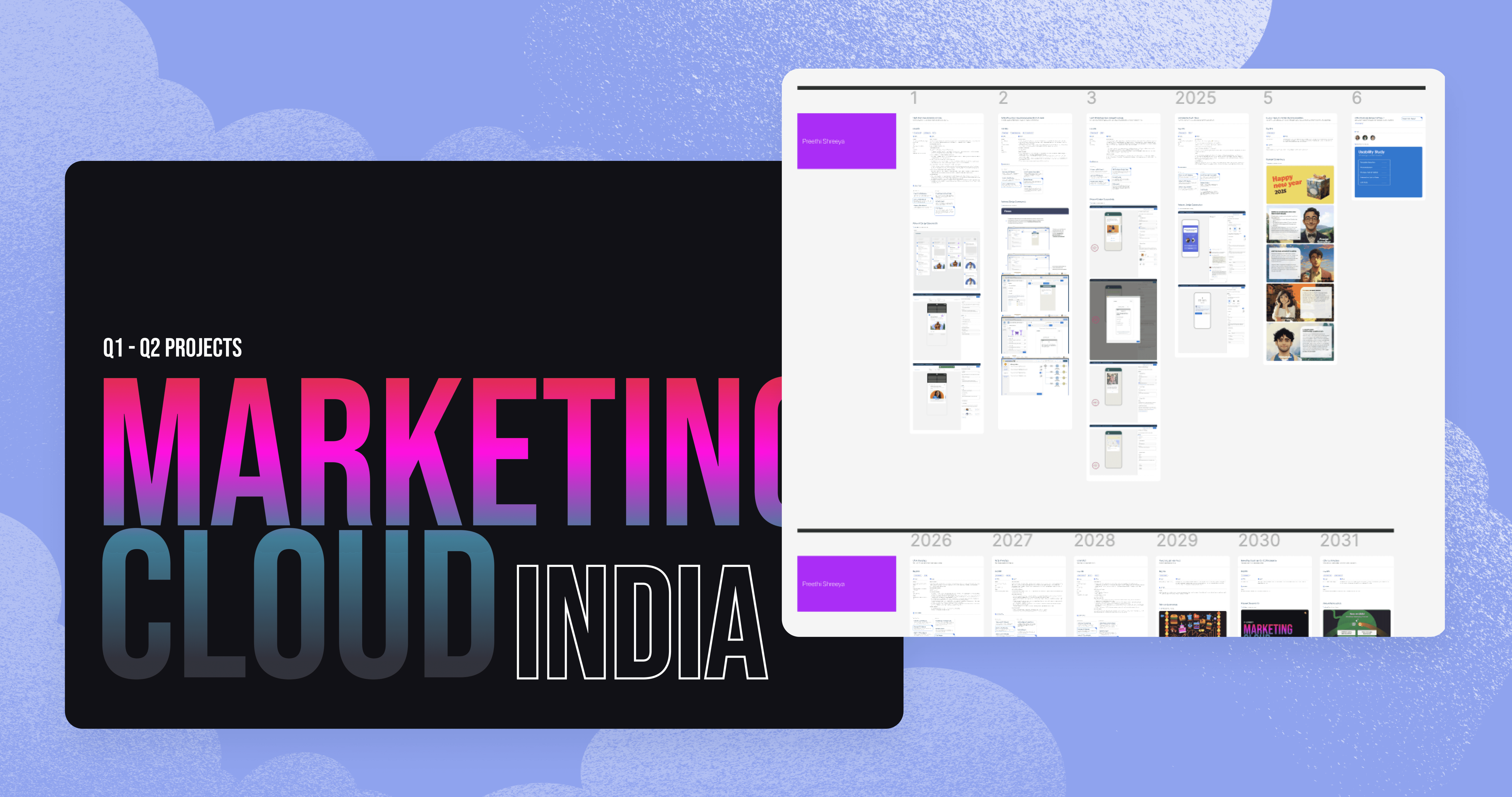
Great design that nobody sees doesn't help anyone. I led a "Team Portfolio" activity where the Marketing India design team gathered quarterly to showcase our work in Figma. These sessions were for ourselves and the leadership to see what we'd accomplished.
I also created Marketing Cloud India UX's first comprehensive portfolio presentation, which got great reception from a large audience.
Learning out loud and sharing year-end gifts
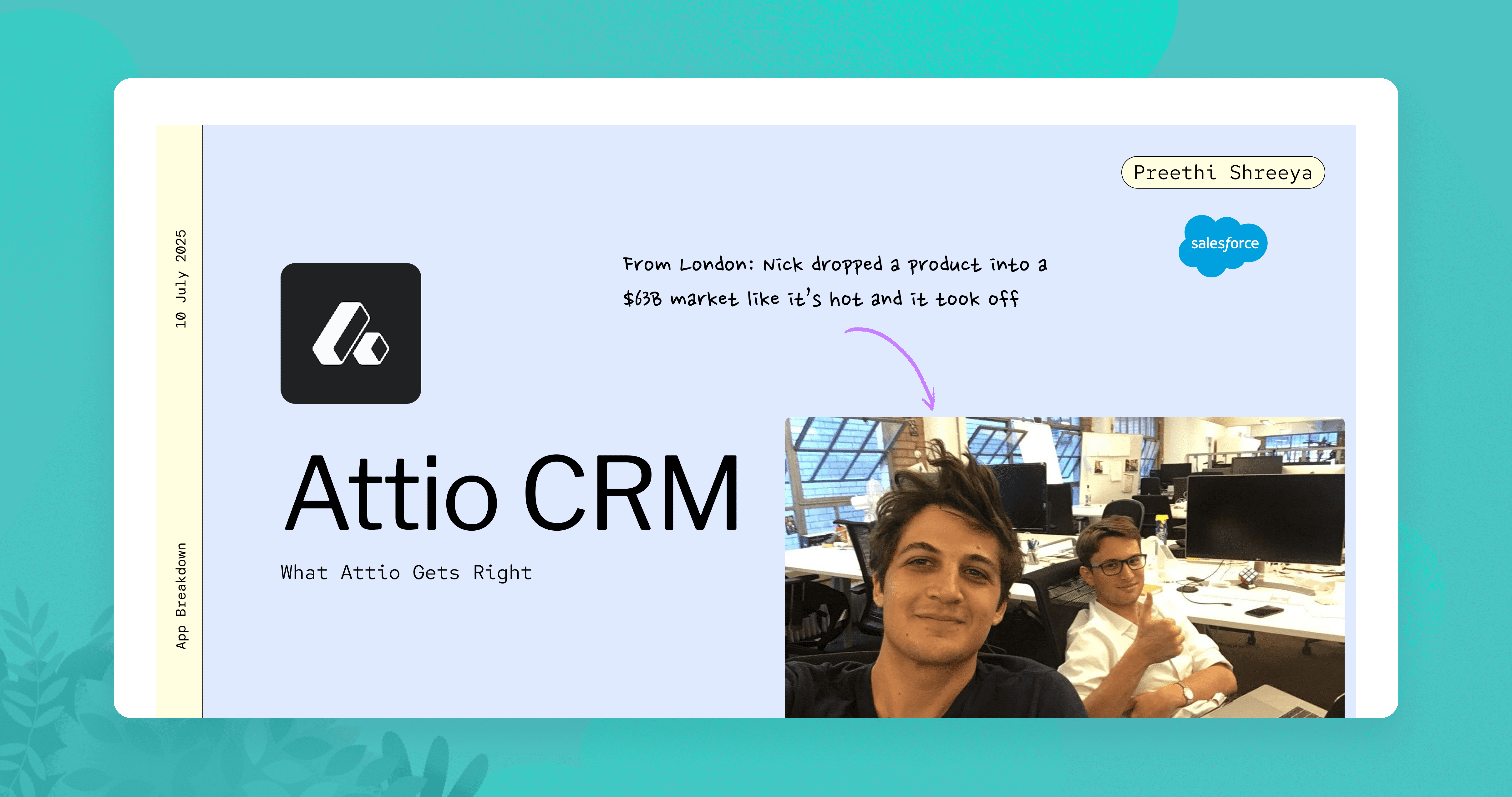
I like turning our collective curiosity into something the team can use. I researched Attio, a Salesforce competitor and broke down their intelligent design decisions to share with our team as part of an App Breakdown initiative that was run by a principal designer. It helped us learn what makes successful and innovative competitors tick.
I also started a tradition with the Platform UX India team. We'd gather interesting design finds from the team and share as a year-end gift. Amazing recommendations that we carried into the next year.

Why these matter and why I love doing them
The core of having a happier and satisfactory work life is to involve ourselves in things that excite us beyond the projects we do. Through these initiatives, I learn and contribute towards a design culture that nurtures consistent creativity that is not accidental.
I approach every work experience like a design problem worth solving. How do we create psychological safety? What frameworks help people think strategically? How do we make learning contagious? And importantly, how do we make it repeatable? With Munch & Learn, we got to implement creative learning. With the other initiatives, it was more for creative execution that brings people together and helps us build a better product.
The most rewarding part of my career has been more than the features I've shipped. It's been watching teammates grow, learning from them, seeing ideas travel across teams and knowing that the design culture we built together is still making work better for people I've met along the way.
That's the kind of impact I want to keep creating and be a part of.